How to Protect Valuable Items in Self-Storage
When you place valuable belongings in self-storage, keeping them organized and protected should be a top priority. Whether you’re storing family heirlooms, electronics, important documents, collectibles, artwork, or valuable furniture, the right preparation can help preserve your items and give you greater peace of mind.
Self-storage provides a convenient way to keep important belongings outside your home while maintaining access to them when needed.
However, choosing the right unit, packing properly, and taking a few extra precautions can make a big difference. If you’re still deciding which type of storage is best for your belongings, our guide on How to Choose the Right Storage Unit for Your Needs can help. Here’s how to protect your valuable items in self-storage.
1. Choose the Right Storage Unit
The first step in protecting valuable belongings is choosing a storage unit that fits the items you plan to store. Different belongings may have different storage requirements, so consider the type, size, and condition of everything going into the unit.
When choosing a storage unit, consider:
- Unit Size: Make sure there is enough room to store your belongings without overcrowding them. If you’re unsure what size you need, check out our guide on What Size Storage Unit Do You Need? A Complete Size Guide.
- Climate-Controlled Storage: Consider climate-controlled storage for sensitive items such as electronics, wooden furniture, photographs, documents, artwork, and other belongings that may be affected by temperature or humidity changes. Learn more about your options in Understanding the Different Types of Storage Units: Climate-Controlled vs. Standard.
- Indoor Storage: Indoor units can provide an added layer of protection from outdoor weather conditions.
- Drive-Up Access: Drive-up units can make loading and unloading larger or heavier belongings more convenient.
Choosing the right storage environment from the beginning can help reduce unnecessary wear and make it easier to properly organize your belongings.
Pro Tip: Make a list of everything you plan to store before selecting a unit. This can help you determine the appropriate amount of space and storage features you need.
2. Clean and Prepare Items Before Storing Them
Before placing valuable belongings into a storage unit, take time to clean and prepare them properly. Dirt, dust, moisture, and leftover food particles can contribute to damage over time.
For furniture, wipe down surfaces and make sure everything is completely dry before covering or storing it. Clean electronics according to the manufacturer's recommendations, and make sure clothing and fabrics are clean and dry before packing them away.
For valuable items such as collectibles or artwork, use appropriate protective materials designed for the specific item.
Taking these simple steps before storage can help prevent avoidable damage and keep your belongings in better condition. For more preparation tips, see our guide on How to Prepare Your Items for Long-Term Storage.
3. Use Quality Packing Materials
The boxes, containers, and protective materials you use can have a significant impact on how well your belongings hold up in storage.
Consider using:
- Sturdy, high-quality boxes for general belongings
- Plastic storage containers for items that benefit from additional protection
- Bubble wrap or protective padding for fragile objects
- Furniture covers for sofas, chairs, mattresses, and other large pieces
- Acid-free materials for photographs, documents, and certain collectibles
Avoid using damaged or weakened boxes for valuable belongings. A strong container provides better support and can make stacking safer and more organized.
Pro Tip: Wrap fragile items individually and place cushioning around them to reduce the chance of scratches, dents, or breakage.
For additional packing and organization advice, check out our guide on Tips for Packing and Organizing Your Storage Unit Efficiently.
4. Protect Furniture and Large Items
Furniture can take up a significant amount of storage space, so it’s important to prepare it correctly before placing it inside your unit.
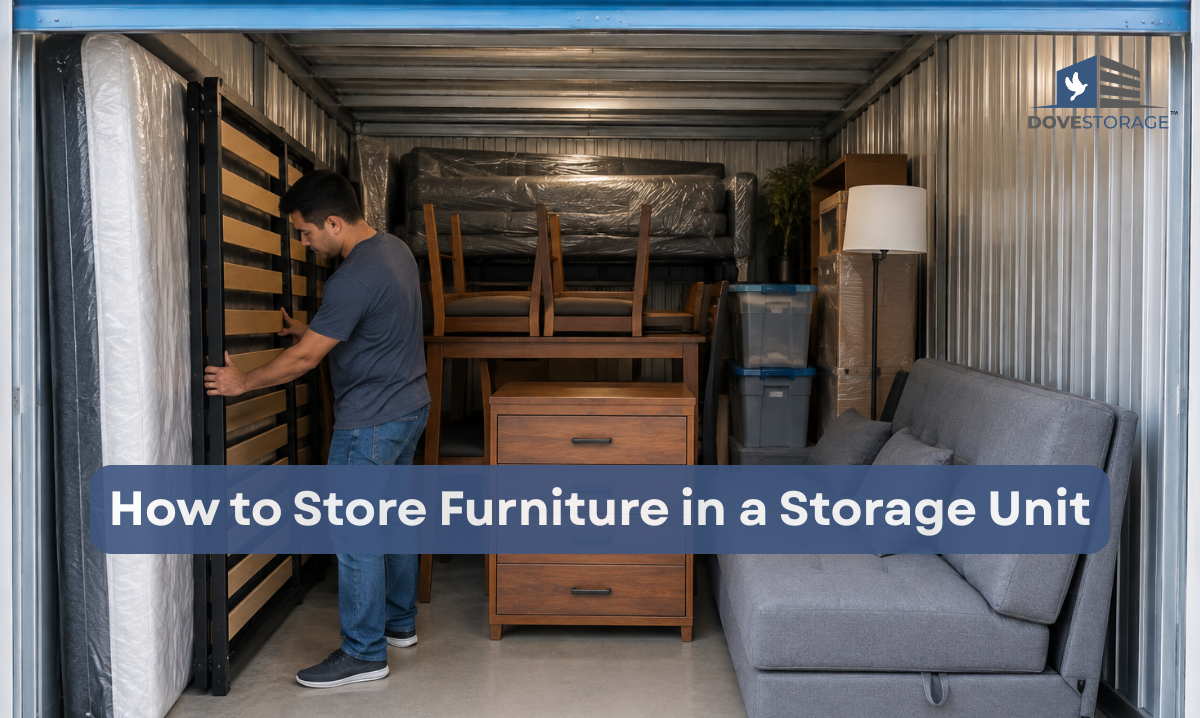
Whenever possible, disassemble larger furniture pieces to make them easier to transport and store. Keep screws, bolts, and other hardware in labeled bags and attach them to the corresponding furniture whenever practical.
Cover furniture with breathable protective covers rather than sealing moisture inside with materials that can trap condensation. Avoid placing heavy boxes directly on upholstered furniture, and leave enough space between items to make accessing your belongings easier.
For wooden furniture, consider using a suitable protective covering and storing it in an environment appropriate for wood and other temperature-sensitive materials.
5. Keep Important Documents and Photos Protected
Documents, photographs, certificates, and family records can be difficult or impossible to replace. These items deserve extra attention when preparing them for storage.
Use protective folders, archival-quality containers, or other materials designed for long-term document preservation. Keep paper items away from potential moisture and avoid placing them directly on the floor.
For especially important records, consider keeping the originals in a secure location while using your storage unit for copies or less frequently accessed materials.
Pro Tip: Digitize important documents and photographs whenever possible. A digital backup gives you an additional copy if an original is ever damaged or misplaced.
6. Create an Inventory of Your Belongings
Keeping track of valuable items is just as important as protecting them physically. Before moving everything into your storage unit, create an inventory of what you’re storing.
Your inventory can include:
- Item descriptions
- Photos
- Purchase dates, when available
- Estimated values
- Serial numbers for electronics and other applicable items
- The box or container where each item is stored
Keep a digital copy of your inventory so you can access it without needing to search through the storage unit.
An organized inventory can make it easier to locate specific belongings and keep track of valuable items over time.
7. Organize Your Storage Unit Carefully
How you arrange your storage unit can affect both accessibility and the condition of your belongings. Avoid simply stacking everything wherever it fits.
Instead:
- Keep boxes off the floor when appropriate.
- Place heavier boxes on the bottom.
- Avoid overloading containers.
- Leave pathways for easier access.
- Keep fragile items away from areas where they could be knocked over.
- Store frequently accessed belongings toward the front.
- Label every box clearly.
Good organization reduces the need to move items around unnecessarily and helps you locate valuable belongings without disturbing everything else.
Pro Tip: Create a simple map of your storage unit showing where major boxes and valuable items are located. Keep a copy with your digital inventory.
For more ideas on maximizing your storage space, read Tips for Packing and Organizing Your Storage Unit Efficiently.
8. Choose a Storage Facility With Security in Mind
The security features of a storage facility are another important consideration when storing valuable belongings. Before renting, take time to learn about the facility’s security measures and access procedures.
Depending on the location, features may include:
- Controlled gate access
- Security cameras
- Well-maintained grounds
- Secure unit locks
- Proper lighting
- On-site management or staff
While no storage facility can eliminate every possible risk, choosing a well-maintained facility with appropriate security measures can provide additional peace of mind.
For a closer look at what to consider, read our guide on Top Security Features to Expect from a Modern Storage Facility.
9. Use a High-Quality Lock
Your storage unit lock is an important part of protecting your belongings. Choose a durable lock designed for storage units and avoid using old, damaged, or easily compromised locks.
Some storage facilities may offer or recommend specific locks that are appropriate for their units. Follow the facility’s guidelines and make sure your lock is properly secured before leaving.
Remember to keep your key or access information in a secure place.
10. Consider Storage Insurance or Coverage
Even with careful packing, organization, and security precautions, unexpected situations can happen. That’s why it’s important to understand whether your homeowners or renters insurance provides coverage for belongings kept in a storage unit.
You may also want to ask about storage insurance options if additional coverage is needed.
Before storing particularly valuable belongings, review your policy and understand its limits, exclusions, and requirements. Keep receipts, photographs, and other documentation that may help establish the value of your belongings.
Pro Tip: Don't assume your existing insurance automatically covers everything in storage. Check your policy before moving valuable items into a unit.
11. Check on Your Belongings Periodically
Even when your belongings are packed properly, occasional visits can help you stay aware of their condition. When you visit your storage unit, take a few minutes to inspect the space and check for signs of damage or moisture.
You can also use these visits to:
- Reorganize boxes
- Update your inventory
- Rotate seasonal belongings
- Check furniture covers
- Make sure containers remain properly sealed
- Remove items you no longer need to store
Regular attention can help you catch potential problems early and keep your storage unit organized.
Protecting valuable belongings in self-storage doesn’t have to be complicated. Choosing the right storage unit, preparing your items properly, using quality packing materials, maintaining an inventory, and selecting a secure facility can all help keep your belongings in good condition.
Self-storage gives you the flexibility to create more space at home while keeping important possessions accessible. With a little planning and the right precautions, you can store everything from family keepsakes and furniture to documents and seasonal belongings with greater confidence.
At Dove Storage, we offer clean, secure, and affordable self-storage solutions designed to help make storing your belongings easier. Whether you need extra space during a move, want to protect valuable possessions, or simply need to create more room at home, Dove Storage can help you find a storage solution that fits your needs.