How to Keep Furniture Clean While in Storage
Furniture is often one of the most valuable and frequently used parts of a home. From comfortable sofas and dining tables to bedroom sets and family heirlooms, these pieces deserve proper care, especially when they need to be stored for an extended period. Whether you're moving to a new home, renovating, downsizing, or simply making more room, keeping furniture clean while in storage can help preserve its appearance and condition.
Fortunately, storing furniture doesn't have to mean worrying about dust, dirt, stains, or unpleasant odors. With the right preparation, packing materials, and storage practices, you can keep your belongings in good shape until you're ready to use them again. Here are some practical tips to help you protect your furniture while using a self-storage unit.
1. Clean All Furniture Before Storing It
Before moving furniture into a storage unit, take time to clean each piece thoroughly. Dust, food crumbs, body oils, and other residue can accumulate over time and become more difficult to remove later. Leftover dirt may also contribute to stains or unpleasant odors during extended storage.
The cleaning method you use should depend on the material:
- Wood Furniture: Wipe surfaces with a soft, dry or slightly damp microfiber cloth. Use a suitable wood cleaner when necessary, and make sure the furniture is completely dry before storing it.
- Upholstered Furniture: Vacuum sofas, chairs, and cushions to remove dust, crumbs, and pet hair. Treat stains with a cleaner appropriate for the fabric, following the manufacturer's instructions.
- Leather Furniture: Remove dust with a soft cloth and use a leather-safe cleaner or conditioner when recommended by the manufacturer.
- Metal Furniture: Wipe away dirt and moisture, then dry the surfaces thoroughly to help prevent rust.
- Glass Furniture: Clean tabletops with an appropriate glass cleaner and wrap them carefully once dry.
Pro Tip: Avoid storing furniture that is still damp. Moisture trapped beneath covers or inside cushions can contribute to musty odors and other problems.
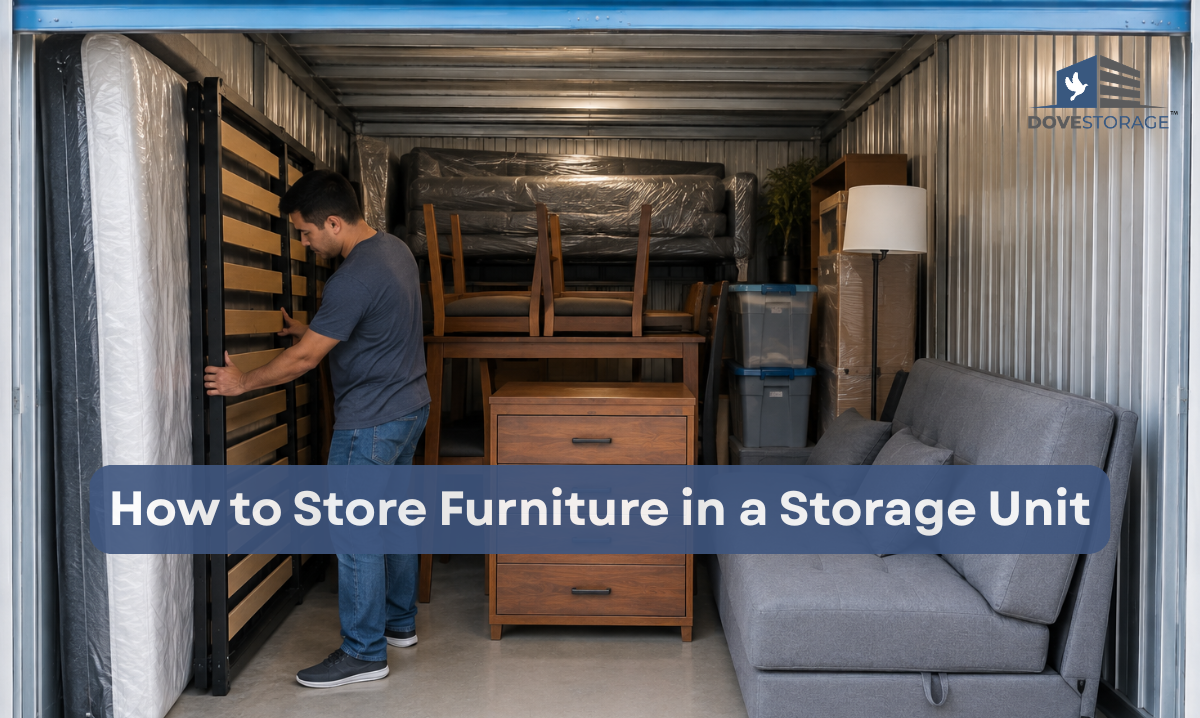
For more detailed preparation advice, read our guide on how to store furniture safely in a self-storage unit.
2. Disassemble Furniture When Possible
Large furniture pieces can be difficult to move, clean, and arrange inside a storage unit. Disassembling furniture when practical makes the process easier and helps protect individual parts from scratches, dents, and unnecessary pressure.
Consider removing table legs, bed frames, shelving components, and other detachable pieces. Keep screws, bolts, brackets, and small hardware together in labeled bags so you can find everything when it's time to reassemble the furniture.
Before taking anything apart, check the manufacturer's instructions to avoid damaging delicate connections or finishes.
Store the pieces neatly and avoid placing heavy objects on top of fragile components. For furniture that cannot be disassembled, make sure there is enough room to position it safely without forcing it into tight spaces.
Pro Tip: Take photos before disassembly and label each component. This simple step can save time and frustration when putting everything back together.
3. Use the Right Covers and Protective Materials
Covering furniture helps protect it from dust, accidental scratches, and dirt while it is in storage. However, choosing the right materials is just as important as covering the furniture itself.
Here are a few useful options:
- Breathable Furniture Covers: Fabric covers or breathable furniture blankets help keep dust away while allowing some air circulation.
- Moving Blankets: Thick blankets provide cushioning for wooden tables, dressers, chairs, and other pieces that may be scratched during transport.
- Protective Padding: Foam padding or suitable cushioning materials can help protect corners, edges, and delicate surfaces.
- Plastic Wrap: Stretch wrap can be useful for securing drawers, doors, or furniture pads during a move. Avoid wrapping damp furniture or tightly sealing upholstered and wooden pieces in plastic for long-term storage.
Make sure covers fit properly without placing unnecessary pressure on the furniture. Avoid using rough materials that could scratch polished finishes or fabrics.
For sofas and mattresses, breathable covers are generally preferable for extended storage because they reduce the risk of trapping moisture.
4. Choose the Right Storage Environment
The environment in which furniture is stored plays an important role in maintaining its condition. Temperature fluctuations, humidity, and moisture can affect different materials in different ways.
Wood may expand or contract as environmental conditions change, while upholstery can absorb odors and moisture. Metal components may also be vulnerable to rust if exposed to damp conditions.
When selecting a self-storage unit, consider the type of furniture you're storing and how long it will remain there. Our guide on choosing the right storage unit for your home explains the factors to consider when comparing storage options.
Climate-Controlled Storage: Depending on the facility, climate-controlled units can help maintain more consistent temperature and humidity conditions. They may be especially worth considering for valuable wooden furniture, leather pieces, antiques, and other items sensitive to environmental changes. Learn more about the benefits of climate-controlled storage.
Indoor Storage: Indoor units can provide additional protection from direct exposure to outdoor weather, depending on the facility's design.
Drive-Up Storage: Drive-up units offer convenient loading and unloading for bulky furniture. If you choose this option, take extra care to protect your belongings from moisture and changing environmental conditions.
Remember that no storage option eliminates every risk. Before renting, ask about the facility's available features and choose the option that best suits your furniture.
5. Keep Furniture Off the Floor When Appropriate
Keeping furniture and stored belongings away from direct floor contact can be a helpful precaution, particularly when you're concerned about accidental spills or moisture.
Where appropriate, use sturdy, stable pallets or suitable furniture supports to elevate items. Make sure the supports can safely handle the weight and that furniture remains level and secure.
For sofas and upholstered chairs, follow the manufacturer's recommendations for storage positioning. Avoid placing delicate legs under excessive pressure or balancing furniture in unstable positions.
You should also leave a little space between furniture pieces and the walls when the unit's layout allows it. This makes it easier to inspect your belongings and helps prevent covers from being crushed or surfaces from rubbing against one another.
Pro Tip: Never use unstable stacks of boxes or improvised supports to elevate heavy furniture. Safety and stability should always come first.
6. Organize Your Storage Unit to Prevent Dust and Damage
How you arrange your storage unit can make a noticeable difference in keeping furniture clean. Crowded spaces make it harder to move items safely, inspect stored belongings, and retrieve what you need without causing damage.
Follow these simple organization tips:
- Place Larger Items First: Position wardrobes, dressers, and other large pieces before arranging smaller furniture and boxes.
- Protect Delicate Surfaces: Use moving blankets or suitable padding between furniture pieces to prevent scratches and scuffs.
- Avoid Overloading Furniture: Do not stack heavy boxes on sofas, chairs, or delicate tables. Excessive weight can damage upholstery, cushions, and structural components.
- Leave Room to Move: Create a practical walkway whenever possible so you can access items without shifting everything around.
- Keep Cleaning Supplies Separate: Store appropriate furniture-care products in a designated area, following product safety instructions, rather than placing them directly against furniture.
Good organization also helps you identify potential problems early and reduces the chances of accidentally damaging your belongings when entering or rearranging the unit.
For additional ideas, explore our tips for packing and organizing your storage unit efficiently.
7. Check Your Furniture Periodically
Even after you've cleaned, covered, and arranged your furniture, occasional inspections are a good idea, especially during long-term storage.
If your rental terms and access arrangements allow, schedule periodic visits to check that covers remain in place and furniture is still properly positioned. Look for signs of dust accumulation, dampness, musty odors, or visible damage.
If you notice moisture, investigate the cause and take appropriate steps to protect your belongings. Avoid simply covering the affected area again, as doing so may trap moisture and make the problem worse.
During inspections, you can also check hardware bags, adjust loose covers, and make sure nothing has shifted or fallen against delicate pieces.
Pro Tip: Keep a simple inventory with photos of your furniture before storing it. This helps you track what you have and gives you a useful reference when you retrieve your belongings.
If you're storing antiques, heirlooms, or other important possessions, our guide on how to protect valuable items in self-storage offers additional precautions to consider.
8. Prepare Furniture for Long-Term Storage
If you plan to store furniture for several months or longer, a little additional preparation can help you maintain its condition.
Before placing furniture in storage, make sure every piece is clean and completely dry. Remove items from drawers, clean hidden surfaces, and check underneath cushions where crumbs and dust may collect.
For wooden furniture, follow the manufacturer's care recommendations and avoid applying excessive polish or oil. For upholstered pieces, ensure cushions are dry and use suitable breathable covers.
If you're storing furniture with drawers or doors, follow the manufacturer's guidance on whether they should remain closed or slightly open. Keep detachable components and hardware organized, and avoid stacking pieces in ways that could cause warping or other damage.
It's also wise to consider your expected storage period when selecting a unit. Furniture that is particularly valuable, delicate, or sensitive to environmental changes may require more specialized storage conditions.
Taking these precautions can help reduce the amount of cleaning and repair needed when you're ready to bring your furniture back home.
Keeping furniture clean while in storage starts with proper preparation. By cleaning each piece, using suitable protective covers, choosing an appropriate storage environment, and organizing your unit carefully, you can help protect your furniture from dust, scratches, moisture, and unnecessary wear.
Whether you're storing a bedroom set during a move, protecting a family dining table during renovations, or making room for a growing household, a self-storage unit can provide valuable extra space without requiring you to part with furniture you want to keep.
At Dove Storage, we offer clean, secure, and affordable self-storage solutions to help you manage your belongings during life's transitions. Whether you need space for household furniture, seasonal items, or other personal possessions, we're here to help you find a storage option that fits your needs.
Visit Dove Storage today to explore our available storage units and find the right space for your furniture and belongings.