How to Create an Organized Storage Unit Layout
A well-organized storage unit does more than hold your belongings—it makes it easier to find what you need, protects your items, and helps you make the most of every square foot. Whether you're storing seasonal decorations, furniture, household essentials, or business inventory, having a plan can make a big difference in how efficiently you use your space.
Without a clear layout, storage units can quickly become cluttered, with boxes stacked too high and important items buried in the back. Fortunately, a little planning and a few practical organization strategies can help you create a storage space that stays neat, accessible, and functional. Here's how to get started.
1. Plan Your Storage Unit Layout Before Moving In
Before bringing your belongings into your storage unit, take time to create a simple layout. Think about what you'll be storing, how often you'll need to access certain items, and how much floor space you'll need for moving around.
Start by making a list of your belongings and grouping similar items together. For example:
- Seasonal Items: Holiday decorations, winter clothing, camping gear, and outdoor equipment.
- Household Items: Furniture, kitchen appliances, bedding, and home accessories.
- Business Supplies: Office equipment, tools, documents, and product inventory.
- Personal Belongings: Keepsakes, photographs, collectibles, and items you don't use regularly.
Once you've grouped everything, estimate how much space each category will need. This will help you decide where to place each group and prevent you from filling the unit without a plan. If you're clearing out extra belongings before organizing your unit, these home decluttering tips can help you decide what to keep, store, donate, or discard.
Pro Tip: Sketch a basic floor plan on paper before moving day. Mark where large furniture, shelving, and frequently accessed items will go so you can organize everything more efficiently.
2. Choose the Right Storage Unit Size
The size of your storage unit plays an important role in how well you can organize your belongings. A unit that's too small may leave you struggling to fit everything inside, while a unit that's larger than necessary could mean paying for space you don't use.
Before choosing a unit, consider the quantity and dimensions of the items you plan to store. Large furniture, appliances, and bulky boxes require more room than smaller household items or neatly packed containers.
Here are a few general guidelines:
- Small Units: Suitable for boxes, seasonal decorations, clothing, and a few smaller household items.
- Medium Units: Often work well for the contents of a bedroom or several pieces of furniture, depending on their dimensions.
- Large Units: Useful for larger household storage needs, multiple rooms of furniture, business inventory, or bulky equipment.
Remember that the right size also depends on your preferred layout. If you want shelving, an accessible walkway, or room to rearrange items, make sure to account for that when estimating your space.
Choosing the right unit size from the beginning can help you avoid overcrowding and make your storage experience more convenient. For more guidance, check out Dove Storage's complete storage unit size guide to compare common unit dimensions and determine which option may suit your belongings.
3. Create a Clear Walkway for Easy Access
One of the most important parts of an organized storage unit is having a clear path to your belongings. Packing items tightly into every available space might seem efficient at first, but it can make retrieving anything from the back difficult.
Whenever possible, create a narrow aisle through the unit so you can reach different sections without moving multiple boxes or furniture pieces.
To maintain an accessible layout:
- Keep the center aisle or designated walkway clear.
- Position frequently used belongings near the entrance.
- Place less frequently accessed items toward the back.
- Avoid stacking boxes in a way that blocks access to other belongings.
- Leave enough room to safely lift and move heavier items.
Your walkway doesn't have to take up a large amount of space. Even a thoughtfully planned path can make a significant difference when you need to retrieve something quickly.
Pro Tip: Before placing an item in the back of the unit, ask yourself how often you'll need it. If you'll need it regularly, find a more accessible spot.
4. Use Vertical Space to Maximize Storage Capacity
Making the most of your storage unit isn't just about organizing the floor. Using vertical space can help you store more belongings without sacrificing accessibility.
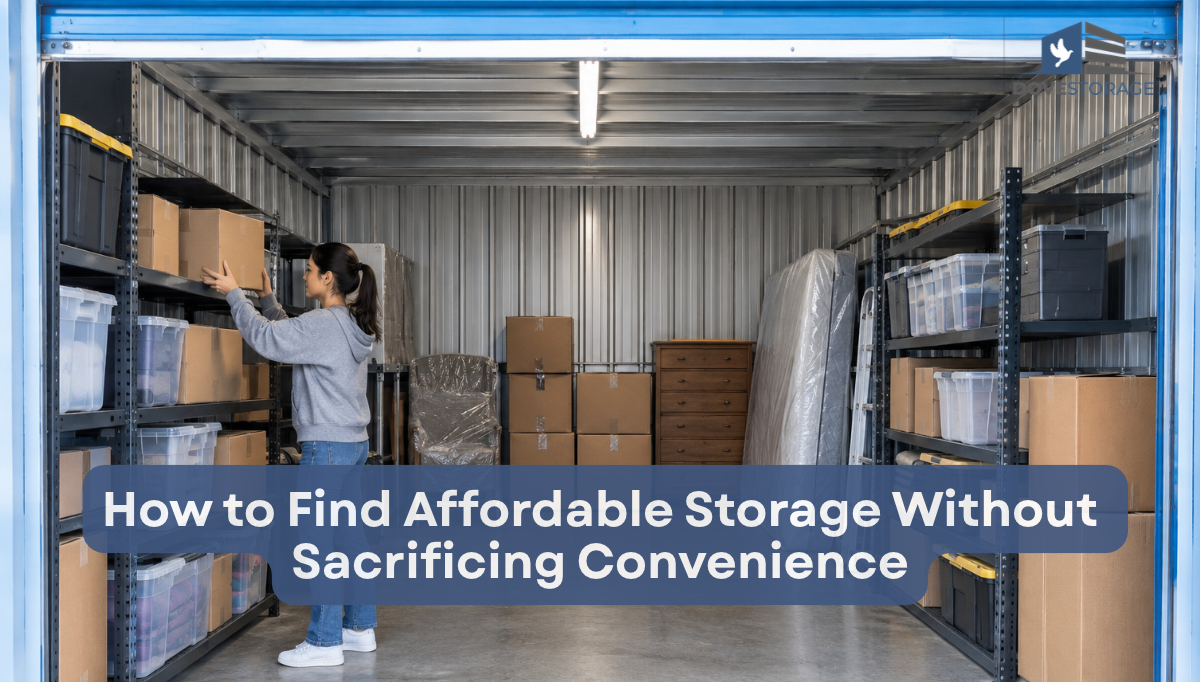
Sturdy shelving units can keep boxes, bins, and smaller items organized while making it easier to see what's stored in each section. Shelves are especially useful for seasonal decorations, household supplies, and business inventory.
Here are a few ways to make better use of vertical space:
- Use Uniform Boxes: Boxes of similar sizes are easier to stack neatly and securely.
- Add Sturdy Shelving: Shelving can help separate categories and reduce the need to stack everything directly on the floor.
- Place Heavy Items Below: Store heavier boxes on lower shelves or near the bottom of a stack to reduce the risk of items falling.
- Keep Lighter Items Above: Place lighter boxes on higher shelves where they can be reached safely.
- Avoid Over stacking: Don't create unstable piles or stack items higher than you can safely manage.
Before using shelving, confirm that it fits your unit and complies with the facility's rules. Always consider the weight limits of shelves and boxes.
If you're storing fragile or valuable belongings, make sure they're placed securely and aren't at risk of being crushed by heavier items. For more ideas on maximizing your available space, explore these tips for packing and organizing your storage unit efficiently.
5. Group Similar Items and Label Everything Clearly
When belongings are scattered throughout a storage unit, even a simple retrieval can turn into a frustrating search. Grouping similar items together and labeling containers clearly helps you stay organized and find what you need without unnecessary rearranging.
For example, dedicate one section to holiday decorations, another to seasonal clothing, and another to household supplies. If you're storing business inventory, organize products by category, project, or item type.
To keep everything easy to identify:
- Label each box on multiple visible sides.
- Use clear plastic bins for items you want to identify at a glance.
- Create separate sections for different categories of belongings.
- Use color-coded labels if you have several types of items.
- Keep a written or digital inventory of what's stored in each box.
You can also number your boxes and record their contents in a spreadsheet. This is particularly helpful if you have many belongings or plan to keep items in storage for several months.
Pro Tip: Write specific descriptions on labels instead of general terms like "Miscellaneous." A label such as "Winter Coats and Scarves" makes it much easier to find what you need.
6. Position Furniture and Bulky Items Strategically
Large furniture and oversized belongings can take up a significant amount of space if they're not positioned carefully. Planning where these items will go before moving them into your unit can help you create a more efficient layout.
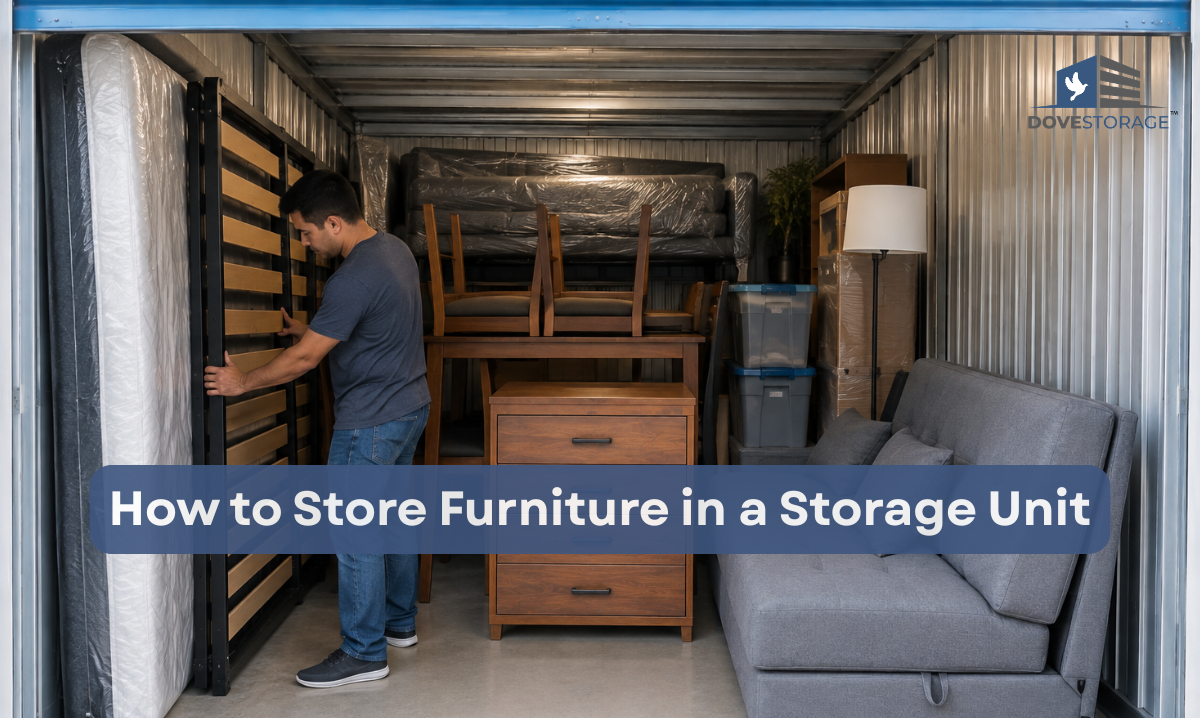
Whenever possible, disassemble furniture that can be safely taken apart. Removing table legs, detachable shelves, and other removable components can make certain pieces easier to transport and arrange.
Consider these tips when organizing larger items:
- Place sofas, mattresses, and other large pieces along the sides of the unit when practical.
- Store furniture components together and label them so they're easier to identify later.
- Keep drawers, hardware, and small detachable parts in labeled bags or containers.
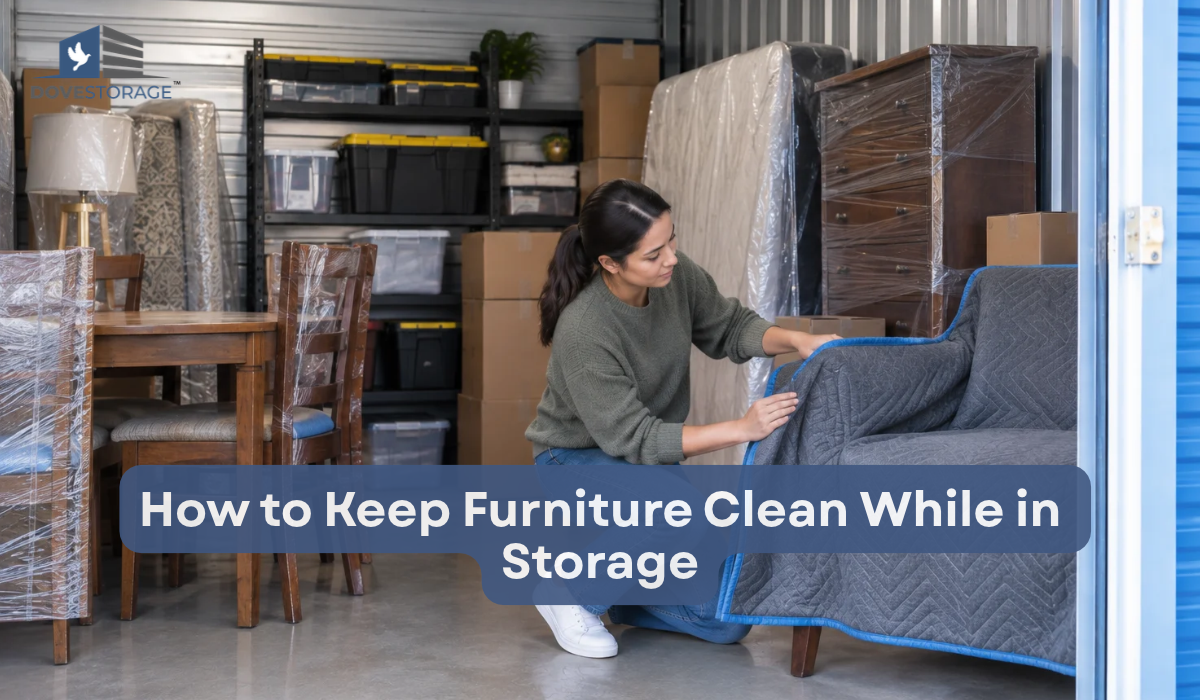
- Cover furniture with appropriate protective materials to help prevent dust and scratches.
- Avoid placing heavy items on top of furniture that could be damaged by the weight.
For additional advice on preparing and protecting large belongings, read Dove Storage's guide on how to store furniture in a storage unit. Following the right storage practices can help keep furniture in good condition while making your layout easier to manage.
For wooden furniture, electronics, photographs, and other belongings that may be sensitive to temperature or humidity changes, consider whether climate-controlled storage is appropriate for your needs.
Be sure to follow safe lifting practices and avoid creating stacks that could fall or damage your belongings.
7. Keep Frequently Used Items Near the Entrance
An organized storage unit should reflect how you actually use your belongings. If you regularly need to retrieve certain items, placing them near the entrance can save time and effort.
Think about which belongings you'll need most often and arrange your layout accordingly.
For example:
- Seasonal Decorations: Keep items for the upcoming holiday or season within easy reach.
- Sports and Outdoor Gear: Position camping equipment, sports bags, or outdoor accessories where you can retrieve them easily.
- Business Inventory: Place frequently requested products near the front and less popular items farther back.
- Household Essentials: Keep items you may need during a move or home renovation in an accessible location.
You can also create a designated section for items you expect to remove soon. This makes it easier to prepare for seasonal changes, moving days, or upcoming projects.
By thinking ahead about how often you'll use each item, you can create a layout that works for your everyday needs instead of simply fitting everything inside.
8. Protect Your Belongings While Maintaining an Organized Layout
Organization is important, but protecting your belongings should be part of your plan as well. Proper packing and placement can help reduce the risk of damage while keeping your storage unit neat.
Before storing your items, make sure everything is clean and dry. Use sturdy boxes, appropriate protective coverings, and containers suited to the items you're storing.
Keep these precautions in mind:
- Avoid storing damp clothing, linens, or other moisture-prone items.
- Use protective covers for furniture and mattresses.
- Store fragile items in suitable containers with cushioning.
- Keep boxes and belongings arranged securely to prevent them from tipping over.
- Follow the facility's guidelines for acceptable items and storage practices.
If you're storing important documents, photographs, electronics, or other sensitive belongings, consider how temperature and humidity may affect them over time. A climate-controlled storage unit may be a suitable option for items that need a more stable environment.
It's also important to choose a facility with security features that meet your needs. Depending on the location, features may include gated access, security cameras, and other measures designed to help protect the property.
Taking these precautions helps you maintain an organized unit while giving your belongings the care they need.
9. Review and Maintain Your Storage Unit Layout
Creating an organized storage unit is only the first step. Keeping it organized over time ensures that your layout continues to work as your storage needs change.
As you add or remove belongings, take a few minutes to return items to their designated sections and update your inventory. Avoid placing new boxes wherever space happens to be available, as this can quickly disrupt your layout.
To maintain your storage unit:
- Review your inventory whenever you add or remove items.
- Return belongings to their assigned locations after each visit.
- Remove items you no longer need to keep in storage.
- Check boxes and protective coverings for signs of damage.
- Reorganize sections when your storage needs change.
- Keep walkways clear and make sure stacked items remain stable.
Consider reviewing your layout at the start of each season, especially if you're storing holiday decorations, clothing, or outdoor equipment. This gives you an opportunity to move upcoming seasonal items closer to the entrance and place items you no longer need farther back.
A little regular maintenance can prevent clutter from building up and help you continue making the most of your storage space.
Creating an organized storage unit doesn't have to be complicated. With a thoughtful layout, clearly labeled boxes, smart use of vertical space, and a designated walkway, you can turn a crowded unit into a practical and accessible storage solution.
Whether you're storing household belongings, seasonal items, furniture, or business supplies, an organized layout helps you use your space more efficiently and makes it easier to find what you need when you need it.
At
Dove Storage, we offer clean, secure, and affordable self-storage solutions to help you manage your belongings with greater convenience. Whether you're making room at home, preparing for a move, or looking for additional space for your business, we're here to help you find a storage option that fits your needs. Visit Dove Storage today to explore our available storage units and find the right space for your belongings.