Seasonal Vehicle Storage Tips for Cars, Motorcycles, and Boats
Vehicles are valuable investments, but when they sit unused for long periods, improper storage can lead to costly damage and unnecessary wear. Whether you own a classic car, motorcycle, boat, or recreational vehicle, seasonal storage is one of the best ways to protect your investment and keep it in great condition year-round.
With the right preparation and storage setup, you can prevent issues like battery failure, rust, moisture damage, and tire deterioration. Here’s how to properly prepare your vehicles for seasonal storage and keep them ready for the road or water when the season returns.
1. Clean Your Vehicle Thoroughly Before Storage
Before placing any vehicle into storage, give it a complete cleaning inside and out. Dirt, salt, moisture, and debris can cause long-term damage if left sitting for months.
For cars and motorcycles:
- Wash and dry the exterior completely
- Vacuum the interior
- Remove food, trash, and personal items
- Wax painted surfaces for added protection
For boats:
- Clean the hull and deck
- Remove standing water
- Empty coolers and compartments
- Dry upholstery and seating areas thoroughly
A clean vehicle is less likely to develop odors, mold, corrosion, or staining during storage.
Pro Tip: Don’t forget to clean underneath your vehicle where dirt and road salt often collect.
2. Protect the Battery During Long-Term Storage
Vehicle batteries naturally lose charge over time, especially when left unused for extended periods.
To help preserve battery life:
- Disconnect the battery if storing long-term
- Use a battery maintainer or trickle charger when appropriate
- Check terminals for corrosion before storage
This simple step can help prevent dead batteries and extend overall battery lifespan.
3. Top Off Fluids and Change the Oil
Fresh fluids help protect your engine and internal components during storage.
Before storing your vehicle:
- Change the oil and oil filter
- Top off coolant, brake fluid, and windshield washer fluid
- Fill the gas tank to reduce moisture buildup
- Add a fuel stabilizer for longer storage periods
For boats, be sure to flush the engine and follow manufacturer winterization recommendations if applicable.
Proper fluid maintenance helps reduce corrosion and keeps your vehicle running smoothly when it’s time to use it again.
4. Protect Tires From Damage
Vehicles that sit in one position for too long can develop flat spots or uneven tire wear.
To help protect tires during storage:
- Inflate tires to the recommended pressure
- Move the vehicle occasionally if possible
- Use tire blocks or mats for longer storage periods
For motorcycles, using a center stand can help reduce prolonged pressure on the tires.
Pro Tip: Avoid storing vehicles directly on dirt or damp surfaces whenever possible.
5. Use a Quality Vehicle Cover
A breathable, properly fitted vehicle cover adds an extra layer of protection against dust, dirt, and moisture.
Choose a cover designed specifically for your vehicle type:
- Car covers for sedans, trucks, or classic vehicles
- Motorcycle covers with secure fasteners
- Boat covers that protect against debris and moisture buildup
Avoid plastic tarps, which can trap condensation and potentially damage surfaces over time.
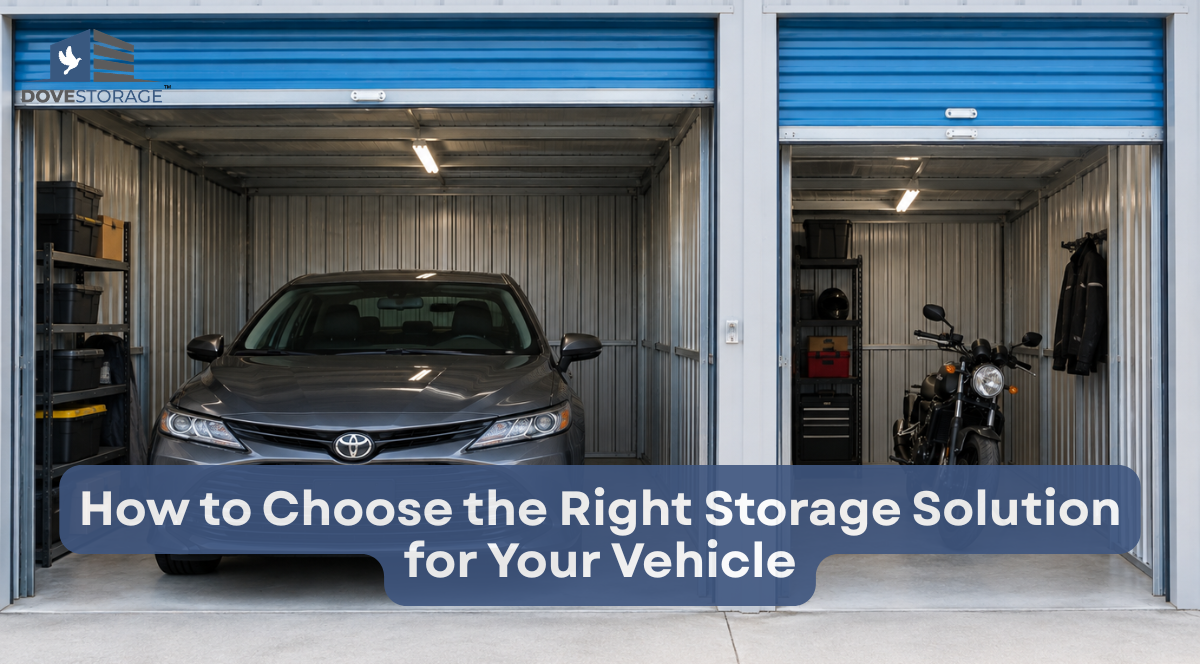
6. Choose the Right Storage Space
Not all storage spaces are ideal for vehicles. Choosing the right type of storage can make a big difference in protecting your investment.
Depending on your needs, consider:
- Indoor storage for additional weather protection
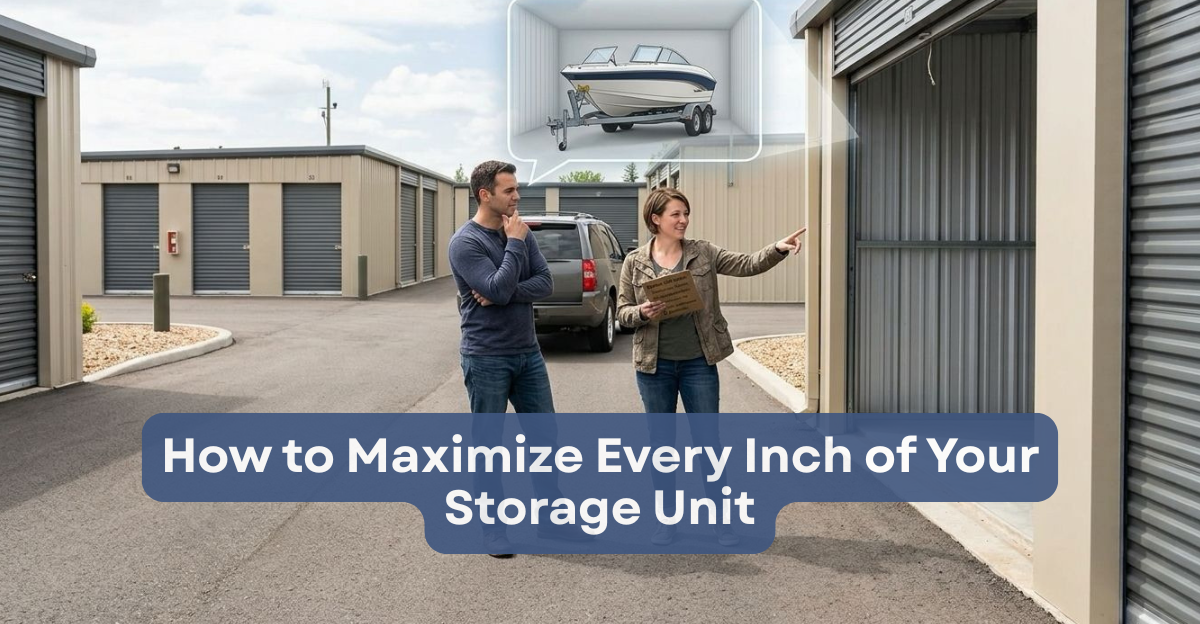
- Covered storage for boats or recreational vehicles
- Drive-up storage access for easier loading and unloading
- Spacious units for seasonal equipment and accessories
A clean, secure, and well-maintained storage facility helps provide added peace of mind while your vehicle is stored away.
7. Prepare Boats and Recreational Equipment Properly
Boats and seasonal recreational equipment often require additional preparation before storage.
Important steps may include:
- Draining water systems
- Removing electronics and valuables
- Cleaning fishing gear and accessories
- Checking trailers and tire pressure
- Covering exposed areas securely
Taking time to winterize and organize equipment now can help prevent expensive repairs later.
8. Check on Your Vehicle Periodically
Even while in storage, occasional inspections can help catch small issues before they become major problems.
During periodic visits:
- Check for leaks or moisture
- Inspect tire pressure
- Ensure covers remain secure
- Start the vehicle occasionally if recommended by the manufacturer
Routine checks help ensure your vehicle stays in excellent condition throughout the storage season.
Seasonal vehicle storage is about more than simply parking your car, motorcycle, or boat—it’s about protecting your investment and extending its lifespan. With proper preparation and the right storage environment, you can avoid unnecessary wear, reduce maintenance issues, and keep your vehicle ready for your next adventure.
At Dove Storage, we offer clean, secure, and convenient storage solutions for vehicles, motorcycles, boats, and seasonal equipment. Whether you need short-term or long-term storage, our facilities are designed to help keep your belongings protected and accessible when you need them most. Visit Dove Storage today to find the right storage solution for your vehicle needs.