Seasonal Storage Tips What to Store and When
Dove Storage • February 24, 2026
A cluttered home often isn’t caused by too much stuff—it’s caused by having everything out at the same time. From holiday decorations and seasonal clothing to sports gear and outdoor furniture, many of the items we own are only used part of the year. When they stick around during the off-season, they take up valuable space and create unnecessary clutter.
That’s where self-storage becomes a practical, flexible solution. By rotating items in and out of storage throughout the year, you can keep your home organized, functional, and ready for every season. Here’s how to use seasonal storage effectively—and what to store when.
1. Start With a Seasonal Declutter
Before moving items into storage, take time to evaluate what you actually need for the current season. Walk through your home and identify items you won’t realistically use for several months.
Ask yourself:
- Is this item only used during a specific season?
- Will I need this again in the next few months?
- Would storing this free up valuable space at home?
Common seasonal items include clothing, decorations, sports equipment, patio furniture, and tools. Removing these from closets, garages, and spare rooms can instantly make your home feel more open and manageable.
Pro Tip:
Decluttering seasonally prevents overpacking and helps you stay organized year-round.
2. Choose the Right Storage Solution
Not all items have the same storage needs. Choosing the right type of storage unit helps protect your belongings and makes seasonal rotation easier.
Here are a few factors to consider:
- Climate-Controlled Storage: Ideal for items sensitive to temperature or humidity, such as clothing, photos, documents, wood furniture, and electronics.
- Drive-Up Storage Units: Convenient for large, bulky items like patio furniture, lawn equipment, or seasonal décor.
- Indoor Storage Units: Offer added protection from weather and are well-suited for household goods and boxed items.
Selecting the right unit ensures your belongings stay in good condition until you need them again.
3. Pack and Label With the Next Season in Mind
Efficient packing makes seasonal swaps quick and stress-free. The goal is to know exactly what’s in storage and be able to access it easily when the season changes.
- Use sturdy, uniform boxes for easier stacking.
- Label boxes clearly with contents and the season they belong to.
- Store items you’ll need first near the front of the unit.
- Keep similar items together to avoid unnecessary searching later.
Pro Tip:
Clear bins work well for seasonal décor—you can see what’s inside without opening every box.
4. What to Store During Fall and Winter
As temperatures drop, it’s the perfect time to store warm-weather items that won’t be used again until spring.
Consider storing:
- Patio furniture and outdoor cushions
- Lawn mowers and gardening tools
- Camping gear and summer sports equipment
- Beach chairs, umbrellas, and pool accessories
- Lightweight summer clothing
Storing these items protects them from harsh weather and keeps garages and sheds clutter-free during colder months.
5. What to Store During Spring and Summer
When warmer weather returns, it’s time to rotate cold-weather and holiday-related items into storage.
Common items to store include:
- Heavy coats, boots, and winter accessories
- Snow blowers and winter tools
- Holiday decorations
- Space heaters and seasonal appliances
- Cold-weather sports equipment
This rotation frees up closets and makes everyday items easier to access during warmer months.
6. Protect Seasonal and Sentimental Items
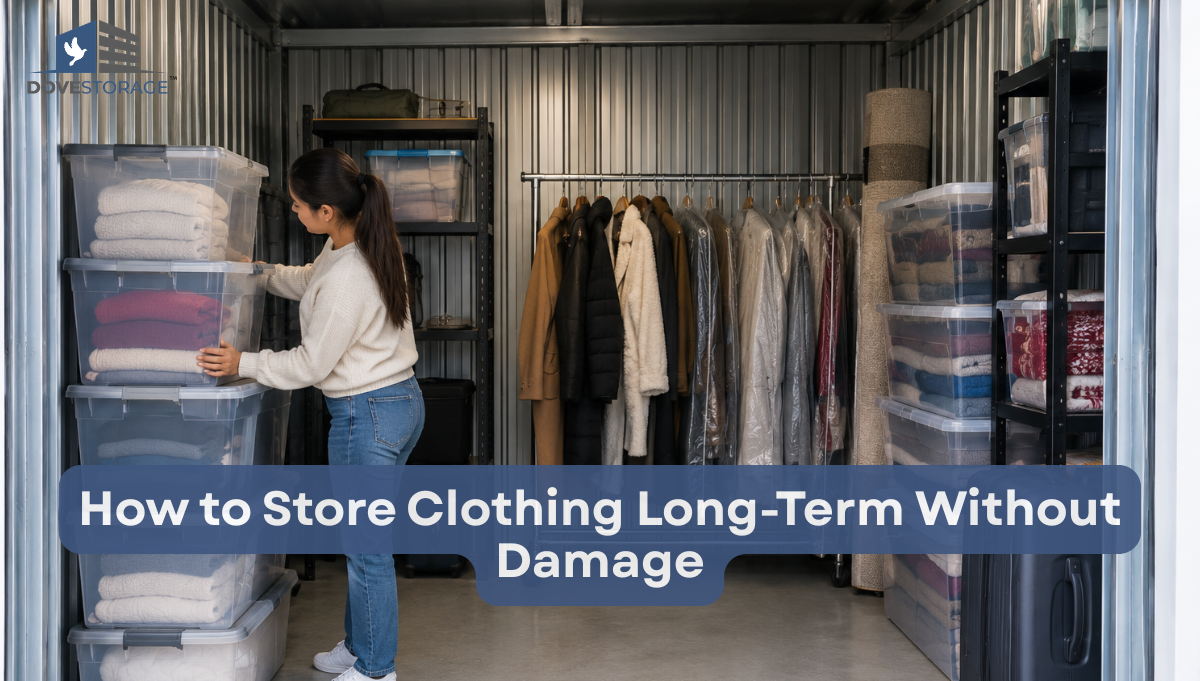
Seasonal items often include decorations, keepsakes, or family traditions that can’t easily be replaced. Taking a few extra steps to protect them goes a long way.
- Use airtight or moisture-resistant containers for fabrics and décor.
- Wrap fragile items with padding to prevent damage.
- Elevate boxes off the floor using pallets or shelving.
- Keep an inventory list of stored items for easy reference.
Proper storage helps preserve both the condition and value of your belongings.
7. Make Seasonal Storage Part of Your Routine
Seasonal storage works best when it becomes a habit. Plan storage visits during seasonal transitions to rotate items, reorganize, and reassess what you’re keeping.
- Avoid overfilling boxes to prevent damage.
- Check stored items periodically for wear.
- Update labels as contents change.
- Remove items you no longer need to avoid unnecessary storage.
Staying organized ensures your storage unit remains an efficient extension of your home.
Seasonal storage is one of the simplest ways to stay organized without giving up the things you enjoy. By rotating items in and out of storage throughout the year, you create more space at home, reduce clutter, and stay prepared for every season.
At Dove Storage, we offer clean, secure, and convenient self-storage solutions designed to support seasonal organization and everyday life. Whether you’re storing summer gear, winter décor, or household items, Dove Storage makes it easy to store with confidence.
Downsizing is an exciting opportunity to simplify your life, reduce expenses, and create a home that's easier to manage. Whether you're moving into a smaller house, transitioning to an apartment, helping a loved one relocate, or simply embracing a minimalist lifestyle, downsizing often comes with one big challenge—deciding what to do with everything you own. The good news is that you don't have to part with your belongings just because you're moving into a smaller space. A self-storage unit provides a convenient and flexible solution, giving you extra room while allowing you to keep the items that still matter. If you're unsure where to begin, check out our guide on How to Choose the Right Storage Unit for Your Needs to find the best storage option for your situation. Here's why storage units are the perfect companion for a successful downsizing journey. 1. Keep the Items You’re Not Ready to Part With Downsizing doesn't mean you have to get rid of everything. Many belongings have sentimental value or may be useful again in the future. A storage unit allows you to safely store items such as: Family heirlooms Photo albums and keepsakes Antique furniture Children's memorabilia Holiday decorations Instead of making rushed decisions during your move, you can keep these items in storage until you're ready to decide what to do with them. Pro Tip: If you're unsure whether to keep or donate something, place it in storage first. You can revisit your decision later without the pressure of moving day. 2. Make Your New Home Feel More Spacious Smaller homes can quickly become overcrowded if every possession comes with you. Using a storage unit allows you to move only the items you use regularly while storing belongings that aren't needed every day. This helps you: Keep closets organized Reduce clutter in living areas Create more functional rooms Enjoy a cleaner, more open home Living with less clutter can also reduce stress and make your new space feel more comfortable. You may also enjoy our blog on How Self-Storage Helps You Reclaim Space at Home for additional organization ideas. 3. Store Seasonal Items Instead of Crowding Your Home Many household items are only used for part of the year but still take up valuable space. Perfect items for storage include: Holiday decorations Winter clothing Patio furniture Lawn equipment Camping gear Sports equipment Rotating seasonal belongings in and out of storage helps maximize your living space without sacrificing convenience. For more ideas, read our Seasonal Storage Tips: What to Store and When . Pro Tip: Store seasonal items together in clearly labeled bins so they're easy to find when you need them. 4. Protect Furniture During Your Transition Sometimes your new home simply isn't ready for every piece of furniture. A storage unit provides a safe place for: Extra bedroom furniture Dining room sets Family heirlooms Large cabinets Decorative pieces This gives you time to decide what fits best without rushing to sell or donate valuable furniture. If you're storing wood furniture, electronics, photographs, or other delicate belongings, consider a climate-controlled storage unit for additional protection from temperature and humidity changes. You can learn more in our blog, Understanding the Different Types of Storage Units: Climate-Controlled vs. Standard . 5. Make Moving Less Stressful Downsizing often involves multiple steps, including selling your current home, purchasing a new one, or waiting for renovations to finish. A storage unit provides flexibility by giving you temporary space for your belongings while you transition between homes. Instead of trying to move everything at once, you can: Move in stages Keep walkways clear during packing Organize items more efficiently Reduce moving-day pressure Having extra storage space can make the entire process feel more manageable. You may also find our guide on Moving Soon? How Self-Storage Can Simplify Your Move helpful as you prepare for your transition. 6. Create Room for New Opportunities Downsizing often means embracing a new chapter in life. Whether you're retiring, becoming an empty nester, or relocating for work, having fewer belongings in your home creates opportunities to use your space differently. For example, you can: Turn a spare room into a home office Create a guest room Build a hobby or craft room Design a relaxing reading area A storage unit gives you the flexibility to enjoy your new home without feeling overwhelmed by excess belongings. 7. Stay Organized After You Downsize Downsizing doesn't end once you've moved. Staying organized is just as important afterward. To keep your storage unit efficient: Label every box clearly. Keep an inventory of stored items. Store frequently used belongings near the front. Stack boxes carefully using sturdy containers. Visit periodically to reorganize when needed. Maintaining an organized storage unit makes it easy to find what you need while keeping your home clutter-free. For additional organization strategies, read our blog on Tips for Packing and Organizing Your Storage Unit Efficiently . Pro Tip: Leave a small walkway inside your storage unit so you can easily access items in the back without unpacking everything. Downsizing is about creating a home that better fits your current lifestyle—not giving up the belongings that matter most. A self-storage unit provides the extra space you need to make thoughtful decisions, stay organized, and enjoy a smoother transition into your new home. At Dove Storage , we offer clean, secure, and affordable storage solutions to help make downsizing easier. Whether you need temporary storage during a move or long-term space for treasured belongings, we're here to help you find the right storage unit for your needs. If you're still deciding, our Self-Storage FAQs: Answers to Common Questions can help you learn more before choosing a unit. Visit Dove Storage today to discover a storage solution that fits your next chapter.

Choosing the right self-storage unit is just as important as deciding what size storage unit you need . One of the most common questions renters have is whether they should choose an indoor storage unit or a drive-up storage unit. While both options provide a safe and convenient place to store your belongings, each is designed to meet different storage needs. Whether you're moving, decluttering, renovating, or storing business inventory, understanding the differences between indoor and drive-up storage units can help you make the best decision. If you're new to self-storage, our Beginner's Guide to Renting a Storage Unit is a great place to start. 1. What Is an Indoor Storage Unit? Indoor storage units are located inside a larger building and are accessed through interior hallways. These units provide an extra layer of protection from the elements and are often a great choice for items that benefit from being stored indoors. Indoor units are ideal for storing: Furniture Electronics Important documents Clothing Family heirlooms Collectibles Many indoor units are also available with climate control, making them a good option for temperature-sensitive belongings. To learn more about climate-controlled storage and when it's worth choosing, read our guide on Understanding the Different Types of Storage Units: Climate-Controlled vs. Standard . Pro Tip: If you're storing items made of wood, leather, paper, or fabric for an extended period, an indoor unit can provide added peace of mind. You can also check out our article on How to Prepare Your Items for Long-Term Storage for additional packing tips. 2. What Is a Drive-Up Storage Unit? Drive-up storage units are located on the ground level and allow you to park your vehicle directly in front of the unit. This makes loading and unloading large or heavy items much faster and more convenient. Drive-up units are perfect for storing: Large furniture Appliances Moving boxes Business inventory Lawn equipment Tools Outdoor gear Because you can drive directly to your unit, these are especially popular for customers who need frequent access to their belongings. Pro Tip: If you'll be moving bulky items or making multiple trips to your storage unit, drive-up access can save you time and effort. For more moving advice, read Best Ways to Move Items Into a Storage Unit Without Stress . 3. Consider What You're Storing The type of items you plan to store should be one of the biggest factors in your decision. Choose an indoor storage unit if you're storing: Family keepsakes Electronics Artwork Important paperwork Delicate furniture Choose a drive-up storage unit if you're storing: Heavy equipment Large furniture Business supplies Seasonal equipment Boxes you'll access regularly Matching your storage unit to your belongings helps keep everything organized and protected. If you're unsure how much space you'll need, our guide What Size Storage Unit Do You Need? A Complete Size Guide can help you choose the right fit. 4. Think About Accessibility Convenience matters, especially if you'll be visiting your storage unit often. Drive-up storage units make loading and unloading simple because your vehicle can be parked directly outside the door. This is especially helpful during moves or when transporting large items. Indoor storage units may require walking through hallways or using carts to transport belongings, but many customers appreciate the added protection that comes with being inside a building. Pro Tip: Consider how often you'll need to retrieve items before choosing your unit. If you're storing seasonal belongings, you may also enjoy our blog on How Storage Can Help You Stay Organized Year-Round . 5. Compare Protection from the Elements Weather can play a role in selecting the right storage option. Indoor storage units provide additional protection from rain, snow, wind, and direct sunlight since they're located inside an enclosed building. Drive-up units are built to protect stored belongings, but because the doors open directly to the outdoors, you'll want to pack your items carefully using sturdy boxes, plastic containers, and protective covers. Proper packing helps protect your belongings regardless of which type of unit you choose. Our article Tips for Packing and Organizing Your Storage Unit Efficiently offers additional strategies for keeping your belongings safe and organized. 6. Consider Your Budget Both indoor and drive-up storage units provide excellent storage solutions, but pricing can vary depending on location, size, and available features. Drive-up units are often a practical choice for customers prioritizing convenience and easy access. Indoor units may offer additional features that make them worthwhile for customers storing valuable or delicate belongings. The best value comes from choosing the unit that fits both your storage needs and your budget. If you're comparing storage options, you may also find Average Cost of a Storage Unit and What Affects the Price helpful. 7. Which Storage Unit Is Right for You? There's no one-size-fits-all answer. The best storage unit depends on what you're storing and how you plan to use it. An indoor storage unit may be the right choice if you: Want added protection from the weather Are storing delicate or valuable belongings Need long-term storage for household items A drive-up storage unit may be ideal if you: Need to move heavy or bulky items Plan to access your belongings frequently Want quick and convenient loading and unloading Taking a few minutes to evaluate your storage needs can help ensure you choose the option that's right for you. If you're still deciding, our blog How to Choose the Right Storage Unit for Your Needs can help you compare your options. Both indoor and drive-up storage units offer reliable solutions for creating extra space at home or for your business. The key is understanding the advantages of each option and selecting the one that best matches your belongings, budget, and lifestyle. At Dove Storage , we offer a variety of clean, secure, and affordable storage options to fit your unique needs. Whether you're looking for the convenience of a drive-up unit or the added protection of an indoor storage unit, we're here to help you find the right solution. Browse our available storage units or explore our collection of self-storage tips and resources to learn more before choosing the storage solution that's right for you.