How Small Businesses Benefit From Self-Storage
Running a small business comes with constant challenges—limited space, growing inventory, seasonal demand changes, and the need to stay organized while keeping costs under control. As operations expand, many business owners quickly realize that their home, office, or storefront is no longer enough to support their storage needs.
Fortunately, self-storage units offer a flexible and cost-effective solution. They give small businesses the extra space they need without the commitment and expense of leasing larger commercial properties. Here’s how self-storage can help your business operate more efficiently and grow with confidence.
1. Start by Identifying Your Storage Needs
Before renting a storage unit, take a close look at what your business actually needs to store. Many small business owners underestimate how much space is being taken up by non-essential items.
Walk through your workspace and categorize items into: keep on-site, store, relocate, or discard. Ask yourself:
- Do I need daily access to this item?
- Is this seasonal or occasional inventory?
- Am I paying valuable workspace space for things I rarely use?
Items like extra inventory, marketing materials, tools, event supplies, and archived documents are often perfect for storage.
Pro Tip: Separating essential and non-essential items first helps you choose the right storage unit size and avoid overpaying for unused space.
2. Choose the Right Type of Storage Unit for Your Business
Not all storage units serve the same purpose, and choosing the right type can make your workflow much smoother.
Here are a few common options:
- Climate-Controlled Units: Ideal for sensitive items such as documents, electronics, packaging materials, or wood-based products. These units help maintain stable temperature and humidity levels year-round.
- Drive-Up Units: Perfect for businesses that move inventory frequently. Easy access makes loading and unloading faster and more efficient.
- Indoor Units: Provide added protection within a more secure, enclosed environment, making them a great option for valuable or delicate business items.
Selecting the right unit ensures your inventory and equipment stay protected while remaining easy to manage.
3. Improve Organization and Workflow Efficiency
Self-storage isn’t just about extra space—it’s about improving how your business operates day to day.
Once you’ve chosen a unit, organize it in a way that supports efficiency:
- Use uniform boxes for easier stacking and space optimization
- Clearly label all inventory and materials
- Store frequently used items near the front
- Use shelving to maximize vertical space and improve visibility
- Leave a small walkway for easier access
Pro Tip: A well-organized storage unit can function like a mini warehouse, helping you save time during busy operations.
4. Manage Seasonal Inventory with Ease
Many small businesses experience seasonal fluctuations in demand. Self-storage makes it easier to adapt without overcrowding your workspace.
For example:
- Store holiday merchandise during off-season months
- Rotate promotional materials based on campaigns
- Keep event equipment safely stored when not in use
- Organize seasonal products in advance for smoother transitions
This approach helps maintain a clean, functional workspace while ensuring your inventory is always ready when needed.
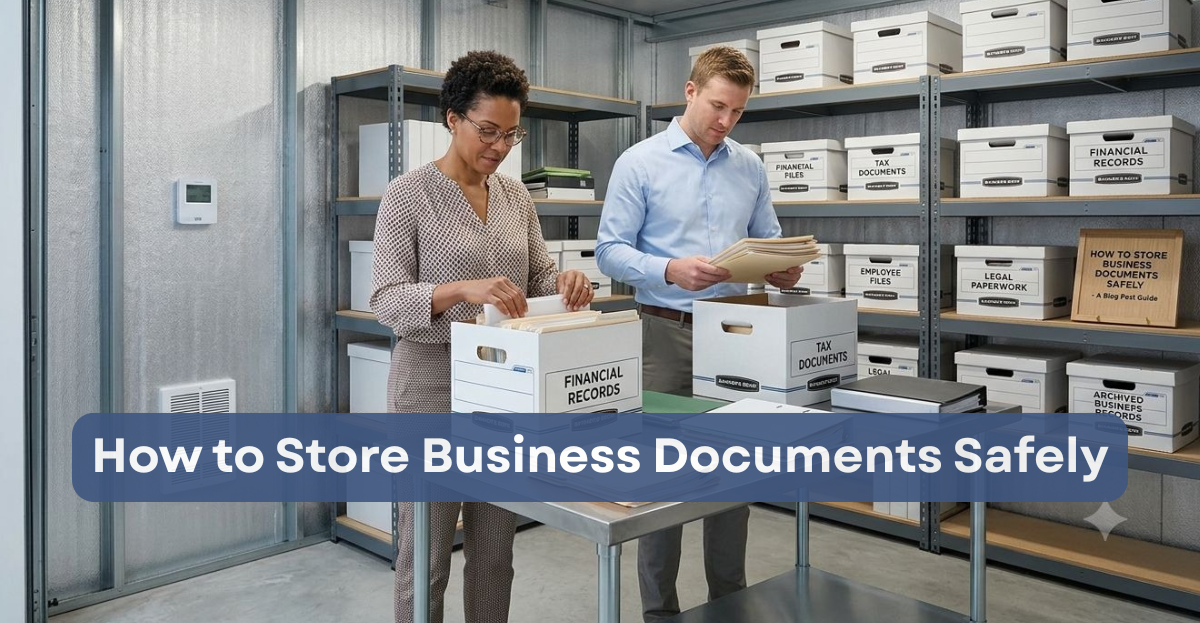
5. Protect Business Inventory and Important Documents
Keeping business assets safe is essential, especially when storing items long-term.
A self-storage facility offers a secure environment for:
- Extra inventory and supplies
- Equipment and tools
- Archived records and paperwork
- Marketing and promotional materials
For added protection, use durable bins, waterproof containers, and proper labeling. Keeping a digital inventory of stored items can also help you stay organized and avoid unnecessary duplication.
Pro Tip: Consistent organization reduces loss, damage, and wasted time searching for stored items.
6. Free Up Valuable Business Space
One of the biggest advantages of self-storage is the ability to reclaim your primary workspace.
By moving excess items off-site, you can:
- Create a more efficient office or storefront layout
- Improve customer-facing spaces
- Expand work areas for employees
- Reduce clutter and increase productivity
A clean and organized workspace helps improve focus, workflow, and overall business performance.
7. Scale Your Business Without Major Overhead Costs
As your business grows, so does your need for space. However, upgrading to a larger commercial property isn’t always cost-effective.
Self-storage offers a flexible alternative that allows you to scale gradually. You can increase or adjust your storage space as your business evolves—without long-term lease commitments or high overhead costs.
This makes it an ideal solution for startups, growing retailers, contractors, and service-based businesses.
8. Maintain and Reorganize Your Storage Over Time
Just like your business operations, your storage system should be reviewed regularly.
Schedule time to:
- Reorganize inventory based on usage
- Remove outdated or unused materials
- Check stored items for condition and updates
- Maintain a clear inventory list
Keeping your storage unit organized ensures it continues to support your business instead of becoming an extension of clutter.
Running a small business requires smart decisions about space, cost, and efficiency. Self-storage provides a practical solution that helps business owners stay organized, reduce overhead, and focus on growth.
At Dove Storage, we offer clean, secure, and affordable storage units designed to support both personal and business needs. Visit Dove Storage today to find a storage solution that helps your business stay organized, efficient, and ready for growth.