
Seasonal Storage for Retail Inventory Overflow
Dove Storage
September 10th, 2025
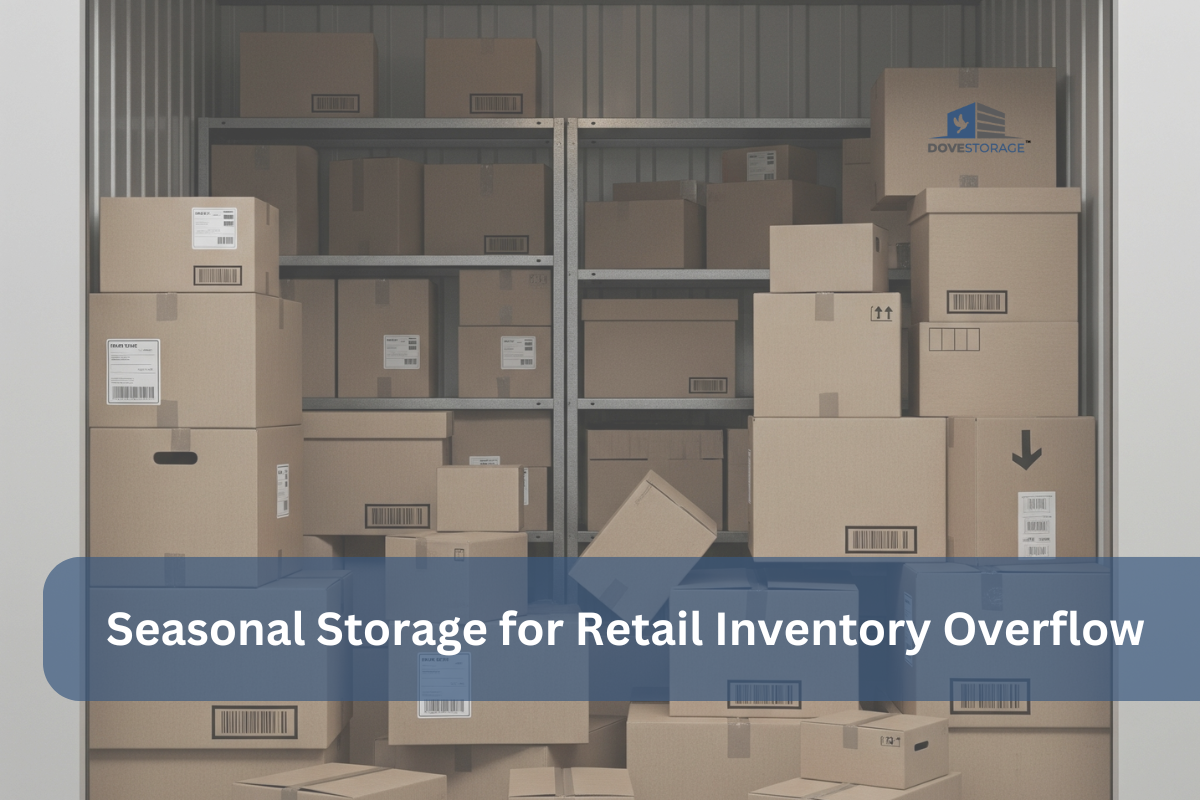
For retailers across the U.S., seasonal fluctuations in sales and inventory are a constant challenge. Whether it’s stocking up for the holidays, preparing for back-to-school shopping, or managing spring and summer promotions, the need for extra space often exceeds what a store’s stockroom can handle. Instead of cramming aisles or renting expensive commercial space, many retailers turn to self-storage units as a practical, cost-effective solution for seasonal inventory overflow.Here’s why seasonal storage has become a go-to strategy for retailers—and how to make the most of it.
1. The Challenge of Seasonal Inventory
Retailers face unique storage challenges throughout the year:
- Holiday Surges: From Halloween costumes to Christmas décor and gift sets, demand spikes sharply in the last quarter of the year.
- Back-to-School Season: Stores must stock backpacks, school supplies, and seasonal apparel well in advance of August and September.
- Spring and Summer Lines: Patio furniture, outdoor gear, and seasonal clothing lines often arrive months before they hit the shelves.
Without extra space, this overflow can clutter stockrooms, reduce efficiency, and make it harder for staff to access everyday inventory. That’s where seasonal storage units come in.
2. Why Self-Storage Makes Sense for Retailers
Self-storage offers a flexible, affordable alternative to leasing larger commercial warehouses. Key benefits include:
- Cost-Effectiveness - Renting a storage unit is significantly cheaper than committing to larger retail or warehouse space. Retailers can adjust unit sizes seasonally, paying only for the space they need.
- Flexibility - Unlike long-term warehouse contracts, most self-storage facilities offer month-to-month rentals. This allows businesses to scale storage up or down depending on inventory needs.
- Convenience - With nationwide availability and 24/7 access options, retailers can easily retrieve items when needed, keeping operations smooth during busy seasons.
- Security - Modern self-storage facilities feature surveillance, gated access, and sometimes climate-controlled units, ensuring that valuable inventory stays safe and protected.
3. What Retailers Commonly Store
Seasonal storage is versatile and can accommodate almost any type of retail inventory. Common items include:
- Holiday Merchandise: Decorations, lights, costumes, and seasonal gifts.
- Promotional Displays: Signs, shelving, mannequins, and event setups not used year-round.
- Excess Apparel: Off-season clothing lines such as winter coats in summer or swimsuits in winter.
- Bulk Purchases: Overstocked items purchased in advance at a discount.
- Outdoor Gear: Lawn equipment, furniture, or sports items waiting for seasonal demand.
By rotating items in and out of storage, retailers can keep shelves fresh and stockrooms uncluttered.
4. Choosing the Right Storage Unit
Not all storage facilities are created equal. When selecting a unit for retail inventory overflow, consider:
- Size Options: Units range from small lockers to warehouse-sized spaces. Retailers should assess how much seasonal inventory they typically store.
- Climate Control: Essential for apparel, electronics, and items sensitive to heat or humidity.
- Accessibility: Look for facilities with drive-up access for easy loading and unloading of bulk items.
- Security Features: Ensure the facility offers surveillance cameras, gated entry, and individual locks.
- Proximity to Store: Choosing a facility near the retail location saves time and transportation costs.
5. Best Practices for Seasonal Storage
To maximize efficiency, retailers should adopt smart storage habits:
- Create an Inventory System: Keep a digital record of what’s in storage, including descriptions and quantities.
- Label Clearly: Use durable labels or barcodes for quick identification.
- Organize by Season: Group items by holiday or season for easy retrieval when needed.
- Use Pallets and Shelving: Elevate items to protect against moisture and improve accessibility.
- Plan Ahead: Move inventory into storage early to avoid last-minute clutter before busy sales periods.
By treating storage as an extension of their stockroom, retailers can ensure smooth seasonal transitions.
6. Case Example: A Holiday Pop-Up Store
Consider a retailer that operates a seasonal pop-up shop for the winter holidays. Instead of renting expensive year-round warehouse space, they rent a self-storage unit each fall. This allows them to:
Store décor, displays, and seasonal stock until needed.
Rotate out-of-season items, keeping only current products in the store.
Save thousands in overhead while ensuring everything is secure and accessible.
This model demonstrates how self-storage provides flexibility and affordability for small and large retailers alike.
7. The Competitive Advantage of Smart Storage
Retail is about efficiency and customer experience. A clutter-free stockroom helps employees work faster, ensures accurate inventory management, and creates a more organized operation. By using seasonal self-storage, retailers gain:
- More Selling Space: Keep the store floor focused on customers, not excess stock.
- Better Organization: Quickly rotate displays and merchandise.
- Lower Costs: Avoid the expense of permanent warehouse space.
Ultimately, seasonal storage is not just about saving space—it’s about giving retailers a competitive edge during busy sales cycles.
For retailers, managing seasonal inventory overflow doesn’t have to mean overcrowded stockrooms or costly leases. Self-storage units offer a flexible, secure, and cost-effective solution to keep operations running smoothly year-round. With the right planning and facility choice, seasonal storage becomes a strategic tool for maximizing space, reducing costs, and enhancing business efficiency. If your store is gearing up for the holidays or preparing for the next big sales season, now is the perfect time to consider how seasonal storage can work for you.
Dove Storage Blog
Categories